
Schedule III Is Live for Cannabis. Here’s What Changes for Operators This Week.
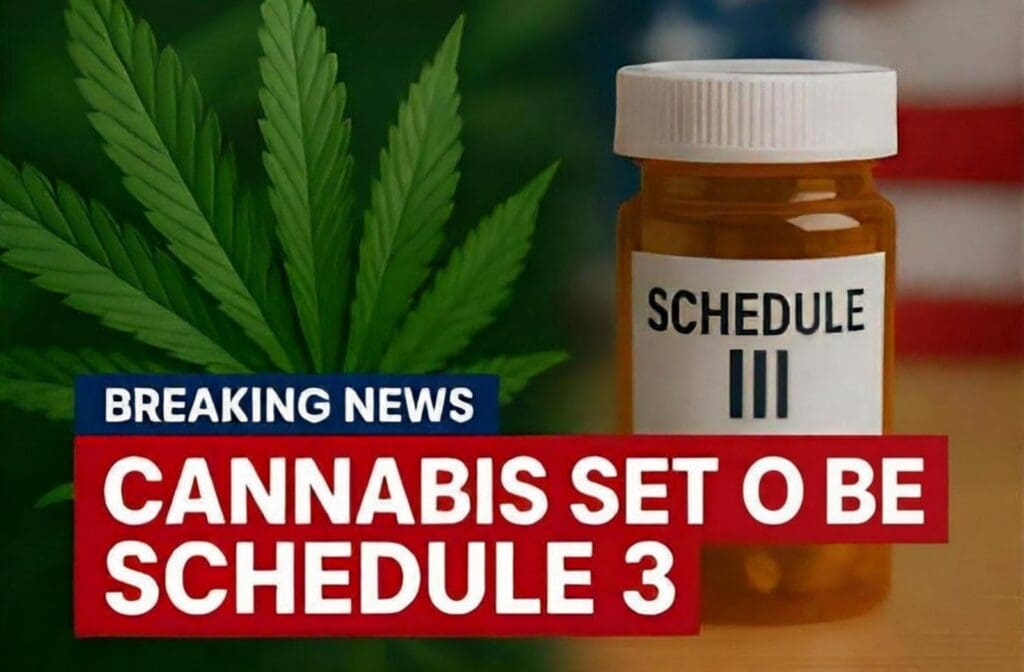
The DEA Schedule III deadline closed Monday, June 22, 2026. If you operate a state-licensed medical cannabis business and you filed within the 60-day window, you can keep operating under your existing state license while the DEA reviews your application. If you did not file, the path forward is more complicated, and your operation is now exposed. This is the post most operators wish they had read three weeks ago. Since you are reading it this week, here is what you actually need to know now.
What just changed
As of April 23, 2026, the federal order moved two categories into Schedule III:
1. FDA-approved drug products containing marijuana.
2. Marijuana subject to a qualifying state medical marijuana license.
Everything else, including adult-use cannabis under state programs and unlicensed bulk marijuana, stayed in Schedule I. This Schedule III cannabis order is narrow on purpose: only state-licensed medical and FDA-approved product. The 60-day filing window for state-licensed medical operators ran from April 23 to June 22. Operators who filed get continuity protection: they keep operating under existing state authorizations while the federal review proceeds. Operators who did not file are in a more uncertain position.
The broader rescheduling question, which would move all cannabis including adult-use into Schedule III, goes to an administrative hearing starting June 29 at the DEA hearing facility in Arlington, Virginia. That hearing concludes no later than July 15. Whatever it produces will be the next major shift.
What the Schedule III cannabis change means for medical operators who filed
If you filed within the window and your business qualifies, the tax math changes dramatically. Under 280E, cannabis businesses have been operating at effective tax rates of 70 to 80 percent because they could not deduct normal business expenses. Schedule III cannabis qualification lifts that. Effective rates for qualifying operators drop into the 20 to 30 percent range.
The cash that 280E was eating is now available for the things 280E forced you to defer. For most operators we work with, that means three things in this order.
One. Real HR infrastructure. The handbook, the training, the manager coaching, and the compliance documentation that you knew you needed but could not afford while 70 percent of your operating budget was going to federal taxes. This is the first reinvestment most operators should make because it is the one that compounds. Our work in real HR infrastructure is designed exactly for this moment.
Two. Benefits. Health insurance, dental, vision, retirement contributions, paid leave. Cannabis operators have historically run light on benefits because the 280E math made comprehensive packages prohibitively expensive. With effective rates dropping, you can build a real benefits package, which directly affects your ability to retain senior staff in a tight labor market.
Three. Growth capital. Multi-state expansion, second locations, M&A opportunities. The same operators who have been treading water for two years are about to have actual reinvestment capital. The window for moving on opportunities is short because every operator in the market is doing this math at the same time.
What the Schedule III cannabis order means for adult-use operators
If you run adult-use only, this week did not change your federal tax position. You are still in Schedule I. You are still subject to 280E. The June 29 hearing could shift that, but until it does, plan your numbers like nothing changed.
That said, the June 29 hearing matters more than most adult-use operators realize. If the broader Schedule III cannabis rescheduling moves forward, the timeline from hearing conclusion to enforceable change is short. Adult-use operators should be drafting their post-Schedule-III HR and payroll plans now so they can execute quickly when the rules change. Operators who wait until rescheduling is announced will be running the same plays adult-use operators in legal states have been running since 2018, which is to say not fast enough.
What the Schedule III cannabis change means for HR this week
Even with the Schedule III cannabis order in effect, some things stay the same and some things shift immediately. Here is the operator’s read on the HR side.
Drug testing policies. Cannabis remains federally controlled. Even for qualifying medical operators now covered by Schedule III cannabis rules, federal drug testing requirements still apply if you contract with federal agencies or work in a regulated industry. The Schedule III cannabis change does not mean cannabis is federally legal. It does mean some accommodations and protections become more legally defensible for employees with state-issued medical cards in qualifying states. Review your drug testing policy this month. Have your HR partner update it to reflect the post-Schedule-III landscape.
Federal benefits access. For qualifying medical operators in Schedule III, banking, retirement plan administration, and benefits broker relationships become substantially less risky. The largest national benefits brokers and 401(k) administrators who would not work with you 60 days ago will now take your call. This is the moment to upgrade your benefits stack.
Federal employment law. Title VII, ADA, FLSA, FMLA, OSHA. None of these changed with the Schedule III cannabis order. They already applied to cannabis employers based on headcount thresholds. Operators who have been treating cannabis as a regulatory gray area for federal employment law have always been wrong about that. Rescheduling just removes one more excuse.
What the Schedule III cannabis change means for payroll and state compliance
280E reporting. If you qualify for the Schedule III cannabis shift, the IRS still expects clean records for the transition year. Coordinate with your accountant on how to treat 2026 deductions, especially for the period between January 1 and the rescheduling effective date. This is a tax conversation, not an HR one, but the HR records (payroll, benefits, headcount) feed into it directly.
State-level compliance. The Schedule III cannabis order does not change anything about state cannabis compliance. Badging, state-required anti-harassment training, multi-state employment law, state-issued employee handbooks. All still apply. State inspectors will not pause their schedules because the DEA rescheduled the substance. Operators in MA should also factor in the Massachusetts cultivator moratorium that just took effect.
What operators should do this week
Five concrete actions for the next seven days.
- 1. Confirm your filing status
If you are a medical operator and you filed, get your acknowledgment in writing and file it where you can find it during an audit. If you did not file and you should have, call your cannabis attorney today.
- 2. Pull the contract on your payroll provider.
Schedule III qualification may change which payroll providers are willing to work with you. If you are currently with a cannabis-specialized provider because nobody else would take you, this is the moment to evaluate whether a mainstream provider would serve you better. Run the math before the renewal date.
- 3. Schedule a benefits review.
If you qualify under the Schedule III cannabis order and have been operating without a real benefits package, this is the moment. Brokers who would not return your calls in May will book a discovery call this month. Move now.
- 4. Document your HR baseline.
Before the rescheduling produces a wave of new policies, document what you have today. Current handbook version, current training records, current badging coordination, current compliance documentation. You need a baseline to compare against the post-rescheduling state.
- 5. Watch the June 29 hearing.
Whatever comes out of the broader rescheduling hearing in the second half of July will reshape the entire industry. Operators paying attention will be three to six months ahead of operators who find out from the news.
What we have been telling operators about Schedule III cannabis
We have been telling cannabis operators since the April 23 order that the Schedule III cannabis change is not the finish line. It is the starting line for a different race. The operators who win the next 18 months are the ones who treat the Schedule III cannabis shift as the moment to upgrade everything that 280E forced them to defer.
For most of our clients, that means upgrading HR first, because HR is the function with the highest compounding return when you finally have the cash to invest in it. A real handbook, real training, manager coaching, and real compliance documentation pay for themselves on the first incident they prevent. The math is even more compelling now that operators are not losing 70 percent of every dollar to federal taxes. If you are evaluating ongoing support, our cannabis HR services and managed HR services for dispensaries posts cover what that scope actually looks like.
We are also telling operators not to confuse rescheduling with deregulation. Schedule III is still a controlled substance. Federal scrutiny on cannabis businesses does not go away. State scrutiny does not go away. The compliance burden does not get lighter. What changes is the cash position to handle it properly.
What is still unsettled
A short list of open questions operators should be tracking.
Whether the June 29 hearing will produce a broader rescheduling that covers adult-use. The expected outcome is somewhere between expanded Schedule III coverage and no change, with most regulatory observers expecting partial expansion.
How the IRS will treat the 2026 transition year for qualifying operators. Expect formal guidance to lag the effective date.
Whether banking access expands meaningfully for qualifying operators or whether the existing cannabis banking partners maintain their dominant position. Watch for moves from the larger national banks within the next 90 days.
How federal employment law gets applied or enforced differently, if at all, in the post-rescheduling environment.
Operators who have legal and HR partners reading the same headlines will adapt faster than operators reading them alone.
A final note
This week is the moment most operators will look back on as the inflection point. The work in front of you for the next six months is to make sure the inflection went in the right direction.
If you want a 15-minute call to look at where your HR stands relative to the new Schedule III cannabis landscape, book a free 15-minute call with Zen Den. We do those for free. No pitch. We will tell you whether what you have is ready for the post-Schedule-III environment, or whether you need to upgrade specific pieces before the next compliance event. Most operators are surprised by what they actually have versus what they assumed.
Editor's note
This post is informational and reflects patterns we have seen across the 50+ cannabis operators we work with. It is not legal advice. Federal drug testing, DOT compliance, and immigration rules interact in complicated ways and change frequently. Consult licensed employment counsel and immigration counsel before making hire or fire decisions involving federally-regulated workers.
June 22, 2026
Kim Bruen


Be the first to comment